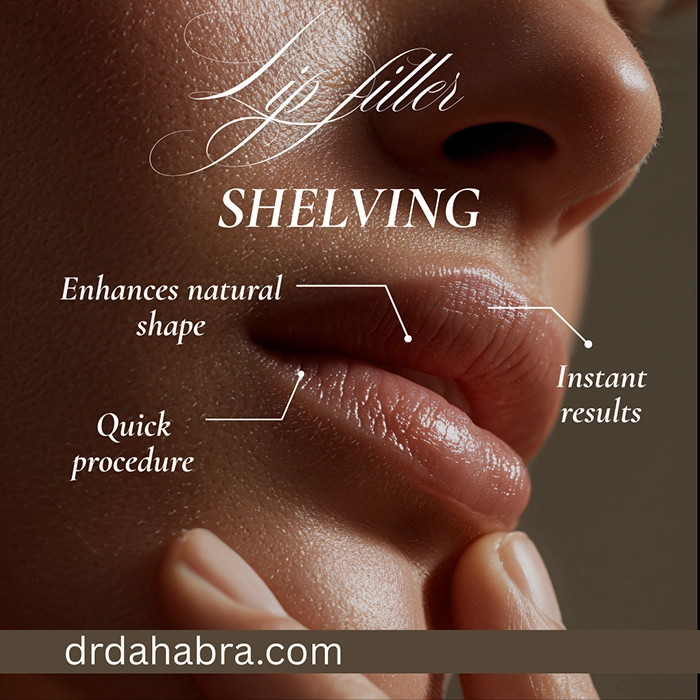
How to Avoid the Lip Filler Shelf: A Guide to Natural, Migration-Free Results
What exactly is lip filler shelving, and is it the same as migration?
Ever noticed that weird little shadow or puffiness right above the top lip? This article discusses how to avoid the Lip Filler Shelf: A Guide to Natural, Migration-Free Results.
That is what we call the lip filler shelf. It happens when hyaluronic acid filler decides to take a hike beyond the vermilion border—which is just the fancy name for the edge of your lips—and parks itself in the skin above. It’s a form of lip filler migration that creates a “filler mustache” look, giving the side profile a slightly duck-like appearance.
While people often use the terms interchangeably, shelving specifically refers to the physical ledge that forms. Migration is the actual process of the gel moving from where it was put to where it shouldn’t be.
This usually happens because the lip tissue is full and the gel has nowhere else to go but up. It is not just a cosmetic annoyance; it’s a sign that the lip border’s structural integrity has been compromised by excessive product or poor placement.
To keep your pout looking soft and real, you really have to respect the anatomy of your face. Think of your lip border like a container: if you keep pouring liquid in once it is full, it will spill over the sides.
That spillover is exactly how you end up with upper lip migration. Getting a natural, migration-free result is all about staying within those lines and not forcing the tissue to hold more than it comfortably can.
Table of Contents
1. Why is choosing an experienced injector the foundation of natural results?
2. Why does starting slow with less volume prevent long-term displacement?
3. How do different filler types impact the risk of a filler mustache?
4. Why is managing your anatomical expectations key to avoiding duck lips?
5. Why should injectors avoid the wet-dry border during the procedure?
6. How does precision over volume help define a sharp vermilion border?
7. Can a Botox lip flip actually stop your filler from moving upward?
8. Why are the first 48 hours so vital for preventing filler shift?
9. How does physical pressure, like sleeping or kissing, move your filler?
10. Why does excessive heat lead to unwanted dermal filler migration?
11. How can you safely manage lip filler swelling without causing a shelf?
12. Does staying hydrated help your hyaluronic acid filler settle properly?
13. Why must you wait six to twelve months before getting a refill?
14. When is hyaluronidase the only real fix for a puffy upper lip?
15. Frequently Asked Questions (FAQs)
16. Conclusion
17. References
1. Why is choosing an experienced injector the foundation of natural results?
Picking someone to put needles in your face is a big deal, and it is the single most important choice you will make for your aesthetic journey.
You want a licensed pro, like a board-certified dermatologist or a plastic surgeon, who lives and breathes lip filler anatomy. These experts know exactly where the “danger zones” are and how to avoid the superficial layers that lead to lip border shelving.
Check out their portfolio and look for people who actually look like themselves, just refreshed. If every patient in their gallery has the same “copy-paste” giant lips, that is a red flag.
A great injector understands that everyone’s mouth is shaped differently and will use specific filler placement techniques to honor your natural smile. They are the ones who will tell you “no” when they think you’ve reached your limit, which is exactly the kind of honesty you need.
Think of it like hiring an architect for a house. You wouldn’t want someone who just adds extra rooms until the foundation cracks, right?
You want someone who understands the structure. An experienced injector knows how to layer product deeply and precisely so it integrates with your tissue rather than sitting on top like a lump of jelly.
This expertise is your best defense against the dreaded ducky side profile.
2. Why does starting slow with less volume prevent long-term displacement?
We live in a world of instant gratification, but your lips didn’t get the memo. Overfilling is the fastest way to get a filler shelf.
If you try to go from thin lips to a massive pout in one sitting, the skin and muscle simply won’t have the space to hold it. By starting with a smaller amount—maybe just 0.5 mL or a single 1 mL syringe—you allow your tissue to expand gently and accommodate the new volume.
Building your look over several sessions spaced months apart is the secret to those “born with it” results. When you rush the process, the filler gets squished and starts looking for an exit, which usually means it moves upward into the mustache area.
It is much better to have a subtle lip filler enhancement that looks crisp than a large one that looks blurry and migrated. Patience really is a virtue when it comes to needles and HA gel.
Imagine trying to fit a large sponge into a tiny cup. If you force it, parts of the sponge will stick out over the rim.
Your lips work the same way. By giving the filler 6 to 12 months to settle and integrate before adding more, you ensure that each layer has a solid “home.”
This gradual approach keeps the lip border sharp and prevents that puffy, over-filled look that everyone wants to avoid.
3. How do different filler types impact the risk of a filler mustache?
Not all gels are created equal, and using the wrong one on the lips is a recipe for disaster. Some fillers are thick and robust, meant for cheekbones or jawlines, while others are soft and flexible.
For the lips, you want something that moves when you talk, eat, and smile. Brands like Restylane Kysse or Juvederm Volbella are specifically designed to be “tissue-friendly,” meaning they blend in rather than sitting as a hard mass.
If an injector uses a filler that is too heavy, it can easily succumb to the pressure of your orbicularis oris muscle (the muscle that circles your mouth). Every time you pucker or speak, that heavy filler gets pushed around.
Soft HA fillers integrate more readily into the delicate lip tissue, reducing the likelihood of migration into the skin above. Choosing the best lip fillers for your specific skin thickness makes a world of difference in the final outcome.
Think of it like choosing the right material for a piece of clothing. You wouldn’t use heavy denim to make a light summer scarf; it would be stiff and sit awkwardly.
Similarly, your lips need a product that mimics their natural squishiness. Using a flexible, high-quality dermal filler ensures that your enhancement looks natural in motion and stays exactly where it was placed.
4. Why is managing your anatomical expectations key to avoiding duck lips?
We all see those filtered photos on social media, but your natural lip anatomy has a “max capacity.” If you have a very thin upper lip with a tight philtrum, you might never be able to achieve a massive “Russian Lip” look without it migrating.
A skilled injector will look at your face and tell you what is realistically possible. Trying to force a shape that your body can’t support is the number one cause of overfilled lip correction cases.
When you push the limits of your anatomy, the filler has no choice but to project outward or upward. This is how you get that “ducky” look from the side, where the lip sticks out further than the nose.
Understanding that “better” is better than “bigger” will save you a lot of heartache and money in the long run. It is about enhancing what you have, not about building an entirely new mouth from scratch.
Think of your lips like a canvas. A painter can only put so much oil paint on a small surface before it starts running down the frame.
If your natural border is shallow, trying to create a massive wall of filler will just result in a shelf. Embracing a more natural lip-injection style ensures your features stay balanced and your smile remains the star of the show.
5. Why should injectors avoid the wet-dry border during the procedure?
The “wet-dry border” is that transition point where the dry part of your lip meets the moist inside of your mouth.
Injecting too close to this area is risky because the tissue there is much looser and more prone to holding fluid. If filler is placed too far back toward the “wet” side, it can cause significant lip filler swelling and make it much easier for the gel to shift around or form lumps.
Precision is the name of the game here. A pro injector avoids that inner mucosal tissue to ensure the filler provides structure rather than just “bulk.
When filler is placed too deep or too far back, it doesn’t give you that pretty pout; instead, it can make the lips look heavy and contribute to a feeling of “balls” or hard lumps inside the lip. It can even make the lip flip inward, which is the opposite of what most people want.
Think of this area like a marshy ground versus solid soil. You want to build your house on the solid soil of the dry lip area.
If you get too close to the “marsh” of the wet border, everything becomes unstable. Keeping the product toward the front and middle of the lip ensures a crisp, clean look that stays put even when you’re laughing or talking.
6. How does precision over volume help define a sharp vermilion border?
Many people think they need more filler to get “defined” lips. In reality, definition comes from precision, not volume.
By focusing on the vermilion border—the very edge where your lip meets your skin—an injector can create a sharp, “crisp” look without making the lips look huge. This technique creates a beautiful frame for the mouth that catches the light just right.
When the focus shifts to just adding volume, the natural lines of the lip get blurred. This “blurry” look is often the precursor to a filler shelf.
If the injector is just “filling the tank,” the edges lose their sharpness, and the whole area starts to look like one puffy mass. Precision-based aesthetic injector tips always emphasize small, controlled droplets of filler rather than large boluses that can easily migrate.
It’s like drawing a picture; a sharp pencil gives you a clean outline, while a fat crayon makes everything look messy. Using fine-tuned techniques like “tenting” or micro-droplets allows for a lift that looks natural.
This ensures the filler supports the lip’s shape from the inside out rather than simply inflating it like a balloon.
7. Can a Botox lip flip actually stop your filler from moving upward?
Here is a cool trick: sometimes the best way to keep filler in place is to use a little Botox. A “lip flip” involves tiny injections of Botox into the muscle above the upper lip.
This relaxes the muscle that normally pulls the lip inward and upward when you smile. By relaxing this tension, there is less physical “squeezing” on the filler, which helps prevent it from being pushed north into the mustache area.
This combination of lip flip vs filler is a game-changer for people with very active facial expressions. If your mouth moves a lot when you talk, your muscles are constantly working to displace that filler.
The Botox acts like a “chill pill” for your lips, allowing the filler to sit peacefully in its designated spot. It also gives the illusion of more height without actually adding more volume, which is a win-win.
Think of the muscle like a rubber band that’s always tight. If you put something under it, the band will try to push it aside.
By loosening the “rubber band” with a little Botox, you create a more stable environment for your dermal filler. It’s a subtle touch that can make a massive difference in preventing that dreaded shelf from forming over time.
8. Why are the first 48 hours so vital for preventing filler shift?
Once that filler is injected, it doesn’t just instantly become part of your body. It takes a little time to “set,” much like wet cement.
The first 48 hours are the most critical window where the gel is still somewhat mobile. If you go home and start messing with it, you are literally asking for migration.
This is the time to be extra gentle and let the product settle into the tissue naturally.
During this window, your body is also dealing with trauma from the needle, which means swelling is at its peak. It is tempting to poke and prod at a new lump, but resist the urge!
That lump is likely just localized swelling or a tiny bit of filler that needs time to integrate. Touching it can flatten the filler or push it into a different plane of the skin, leading to a permanent shelf once the swelling goes down.
It’s like letting a cake cool before you frost it. If you rush it, everything just slides off.
Treat your lips like precious cargo for those first two days. No intense facial massages, no heavy-duty skincare routines around the mouth, and definitely no “testing” the squishiness.
Just let them be, and you’ll be much happier with the results in a week.
9. How does physical pressure, like sleeping or kissing, move your filler?
It sounds a bit dramatic, but physical pressure is a real enemy of fresh filler. If you sleep face down, you are putting hours of consistent pressure on a product that is trying to settle.
This can easily squish the gel toward the edges of the lip or even into the skin above. For at least the first few nights, you really need to be a back-sleeper to ensure everything stays symmetrical and in place.
Other activities like using straws, smoking, or even passionate kissing involve a lot of pursing and pressure. These repetitive motions can act like a tiny manual massage, slowly nudging the filler out of the lip border.
While you don’t have to live in a bubble forever, taking a break from these habits for the first few days gives the filler the best chance to “hook” into your tissue.
Imagine trying to set a piece of tile in wet glue and then leaning on it. The tile is going to slide.
Your filler is the tile, and the tissue is the glue. Once that glue dries—or in this case, once the filler integrates—you can go back to your normal life.
But until then, keep the pressure off to avoid any accidental displacement.
10. Why does excessive heat lead to unwanted dermal filler migration?
You might love a good sauna session or a hot yoga class, but your fresh filler definitely does not. Heat increases blood flow to the face and dilates blood vessels.
This extra circulation can worsen lip filler swelling and make the tissue more “liquid,” which creates an environment where migration is much more likely. Heat can also speed up the initial breakdown of the gel before it has a chance to settle.
Staying away from sunbeds, hot tubs, and intense sun exposure for at least 48 hours is a must. The more inflamed and swollen the area becomes, the more room there is for the filler to move.
It is much better to stay cool and calm while your body heals. Even very hot spicy foods can cause a rush of blood to the lips that you probably want to avoid for a day or two.
Think of it like chocolate. When it’s cool, it stays in its shape.
When it gets too warm, it starts to soften and run. While HA filler isn’t exactly like chocolate, the principle of stability at cool temperatures still applies.
Keeping your internal and external temperature regulated helps ensure that your natural lip injections stay exactly where your injector put them.
11. How can you safely manage lip filler swelling without causing a shelf?
Swelling is totally normal and expected after getting poked with a needle. However, how you handle that swelling matters.
Using a cold compress is great, but you have to be delicate. If you press a heavy ice pack hard against your lips, you are applying the very pressure we just talked about avoiding.
You should gently “hover” or lightly tap the cold pack against the area to soothe it, without pressing it into the skin.
Arnica and bromelain are popular natural supplements that can help reduce bruising and swelling from the inside out. Drinking plenty of water also helps, as it keeps the lymphatic system moving to clear out the post-procedure puffiness.
Whatever you do, don’t try to “massage out” the swelling yourself. What you think is a lump of filler might just be a small pocket of fluid that will go away on its own.
Think of swelling like a temporary guest. It’s annoying, but it will leave soon if you don’t make a fuss.
If you start aggressively icing and pressing, you might move the filler and create a permanent problem (the shelf) to fix a temporary one (the swelling). Be patient and let the “dissolved filler recovery” process happen naturally.
12. Does staying hydrated help your hyaluronic acid filler settle properly?
Hyaluronic acid is a total water magnet. Its whole job in your body is to hold onto moisture.
When you get HA fillers, they actually “plump up” by drawing water from your surrounding tissues. If you are dehydrated, the filler can look a bit flat or integrated poorly.
By drinking plenty of water, you help the filler reach its full potential and settle into a soft, natural texture.
Good hydration also helps your skin stay elastic and healthy. Healthy skin holds filler much better than dry, thin skin.
When your tissues are well-hydrated, they provide a better “cushion” for the filler, helping prevent it from feeling like a hard ridge or from migrating toward the surface. It is the easiest aftercare step you can take, and it benefits your whole face, not just your lips.
It’s like a sponge. A dry sponge is hard and retains its shape, while a wet sponge is soft and moves easily.
You want your lip filler to act like a wet sponge—soft, flexible, and integrated. So, keep that water bottle handy and aim for a gallon a day in those first two weeks to help everything look its absolute best.
13. Why must you wait six to twelve months before getting a refill?
One of the biggest mistakes people make is going back for “just a little more” only two or three months after their last session. Filler doesn’t disappear as fast as you think it does.
Even if you feel like the volume has gone down, it’s often just the initial swelling subsiding. Layering more product on top of filler that hasn’t even begun to break down is the quickest way to end up with a filler mustache fix.
Taking a “filler break” allows your tissue to breathe and prevents over-layering. When you keep adding more and more, the filler eventually has nowhere to go but up and out.
Most modern fillers last 6 to 12 months, and some studies show they can actually linger for years. Waiting for the product to naturally dissolve before adding more keeps the lip border clean and prevents “bulking.”
Think of it like a closet. If you keep buying new clothes without getting rid of the old ones, eventually the doors won’t shut, and things will start spilling out into the hallway.
Your lips are the closet, and the migration is the spillover. Give your lips time to process the product before you decide you need a top-off.
14. When is hyaluronidase the only real fix for a puffy upper lip?
Sometimes, despite our best efforts, migration happens. If you already have a noticeable shelf or a puffy area above your lip, adding more filler will only make it look worse. In these cases, the best move is to hit the “reset button” with hyaluronidase.
This enzyme dissolves HA filler almost instantly. It’s the gold standard for overfilled lip correction and fixing migration.
While the idea of “losing” your filler can be scary, dissolving the migrated product is often the only way to restore a natural look. Once the old, misplaced filler is gone, wait a couple of weeks for the tissue to heal, then start fresh with a better technique.
It’s much better to have a “clean slate” than to walk around with a shelf that bothers you every time you look in the mirror.
It is like painting a room and realizing you picked the wrong color. You could keep adding more coats of a different color, but eventually, the paint will just look thick and messy.
The best thing to do is strip the paint and start over. Hyaluronidase for lips is your “paint stripper”—it clears the way for a beautiful, natural, and migration-free result.
15. Frequently Asked Questions (FAQs) about How to Avoid the Lip Filler Shelf: A Guide to Natural, Migration-Free Results
Q1. How to get lip filler that doesn’t migrate?
Concise Answer: To avoid migration, choose a specialist who uses flexible fillers and a “less is more” gradual approach.
Detailed Answer: Ensuring your filler stays put really comes down to the person holding the needle and the product they use. You want someone who understands that the lip has limited space and won’t try to overstuff it in one go.
Using a soft, high-quality gel that integrates with your tissue instead of sitting on top of it is the secret to a natural look. Also, being patient and building your volume over several months rather than in one afternoon helps keep the lip border from breaking down and leaking.
Q2. How to fix lip filler migration without dissolving?
Concise Answer: Unfortunately, there is no way to move the migrated filler back into the lip; it must be dissolved or allowed to wear off.
Detailed Answer: I know it’s not the news anyone wants to hear, but once that gel has moved into the skin above your lip, you can’t just “push” it back. The tissue in that area has already been displaced.
While you can wait for it to naturally go away over a year or two, the only real “fix” to get your lip shape back immediately is using a dissolving enzyme. Trying to hide migration by adding more filler only creates a bigger shelf and makes the problem harder to fix later.
Q3. How to naturally dissolve migrated lip fillers?
Concise Answer: You can’t manually dissolve filler, but your body will naturally break it down over 6 to 18 months via your own enzymes.
Detailed Answer: There are no magic creams or home remedies that will make your filler disappear faster. Your body has an enzyme called hyaluronidase that slowly breaks down the HA gel over time.
To help this process along, staying healthy and hydrated is good, but mostly you just need to be patient. Some people find that high-intensity exercise might speed it up slightly, but for a real “shelf,” professional help is usually the only way to go.
Q4. Is lip filler migration preventable?
Concise Answer: Yes, migration is largely preventable by using correct techniques, appropriate filler amounts, and following strict aftercare.
Detailed Answer: While there is always a tiny bit of risk with any procedure, most migration is the result of human error—either from the injector or the patient. If you go to a pro who respects your anatomy and you follow the rules (like not sleeping on your face or avoiding saunas), your chances of getting a shelf are very low.
It is all about not pushing the limits of what your lip tissue can naturally hold.
Q5. Does everyone eventually get a lip filler shelf?
Concise Answer: No, many people enjoy beautiful, natural results for years by avoiding overfilling and taking necessary breaks.
Detailed Answer: The “shelf” isn’t an inevitable part of having fillers; it’s a sign of over-saturation. If you only get touch-ups when you actually need them and don’t try to chase a “super-sized” look, your lips can stay crisp and defined forever.
People who get a shelf are usually the ones who get filled too often or too much at once, causing the product to stack up and eventually spill over.
Q6. Why did my filler migrate after two years of looking fine?
Concise Answer: Filler can migrate over time due to constant muscle movement, aging skin, or the cumulative effect of multiple sessions.
Detailed Answer: Even if it looked great at first, the muscles around your mouth are constantly moving—talking, eating, smiling—which can slowly nudge the product. Also, as we get older, our skin loses some of its “hold,” making it easier for the gel to shift.
Sometimes, it’s just the result of “filler buildup” from several years of touch-ups that finally reached a tipping point and moved into the skin above.
Q7. Can I just “push” the migrated filler back into my lip?
Concise Answer: No, trying to massage or push migrated filler can cause more inflammation and potentially move it into even worse positions.
Detailed Answer: It might be tempting to try to “squish” that little ledge back down, but please don’t! You could actually cause bruising or even push the filler into a deeper layer of skin, where it will be even more visible.
Dermal filler isn’t like Play-Doh that you can just reshape once it’s in the skin; once it’s migrated, it’s stuck there until it’s either dissolved by a pro or broken down by your body.
Q8. Is it possible to dissolve only the shelf and not the whole lip?
Concise Answer: Yes, an expert injector can use tiny amounts of dissolver to target just the migrated areas while leaving the rest of the lip intact.
Detailed Answer: This is called “selective dissolving.” It takes a very steady hand and a lot of experience, but a specialist can inject the enzyme exactly where the shelf is.
It’s not always 100% perfect, and some of the filler in the lip might also soften, but it’s a great way to fix a “filler mustache” without losing your entire pout. It’s definitely a job for a top-tier aesthetic pro.
Q9. Why does my filler shelf look worse when I smile?
Concise Answer: Smiling engages the muscles that push the filler upward, making any migration above the border more prominent.
Detailed Answer: When you smile, your upper lip thins out and moves upward toward your nose. If there is filler sitting in that space above the border, the muscle contraction bunches it up, making that “ledge” look much thicker.
This is often when people first notice they have migration—when their face is in motion rather than just resting. It’s a classic sign that the filler is in the skin, not the lip itself.
Q10. Does sleeping on my face cause the filler to shift?
Concise Answer: Yes, consistent pressure from your pillow during the healing phase can easily push fresh filler out of place.
Detailed Answer: For the first two weeks, your filler is still integrating with your tissue. If you spend eight hours a night with your face mashed into a pillow, that physical force acts like a slow-motion massage.
It can flatten the filler or push it toward the edges, creating an uneven look or a shelf. Sleeping on your back is annoying, but it’s a small price to pay for perfect lips!
Q11. Will my natural lips look saggy after dissolving migration?
Concise Answer: No, your skin is remarkably elastic and will typically bounce back to its original shape once the excess filler is removed.
Detailed Answer: A lot of people worry they’ll have “deflated” lips, but unless you’ve been extremely overfilled for many years, your skin will snap back. You might feel a bit “small” at first simply because you’re used to the extra volume, but your natural anatomy remains the same.
Once the swelling from the dissolver subsides, most people find their lips look much better and more youthful, without the migrated ledge.
Q12. Can a lip flip prevent shelving?
Concise Answer: Yes, by relaxing the muscles that pull the lip upward, a lip flip reduces the mechanical pressure that causes migration.
Detailed Answer: A Botox lip flip is like a preventative shield. It reduces the aggressiveness of the “pursing” action, so the filler isn’t constantly squeezed and pushed toward the skin.
It’s a fantastic way to get a bit of extra height and a “pouty” look without using as much filler, thereby lowering your risk of developing a shelf.
Q13. Why is there a hard lump above my top lip?
Concise Answer: A hard lump in that area is usually a pocket of migrated filler or a localized area of swelling and scar tissue.
Detailed Answer: If it’s been more than two weeks since your injection and you still feel a hard “ball” or ridge above your lip, it’s likely a bit of filler that moved. Sometimes, if the injection is too superficial, the product can clump.
You should definitely have your injector take a look; they can usually tell whether it’s something that will settle or needs a tiny drop of dissolver to smooth it out.
Q14. Is it bruising, or is it a filler shadow?
Concise Answer: Bruising is usually purple or yellow and fades in a week, while a filler shadow (Tyndall effect) looks bluish and stays.
Detailed Answer: It can be hard to tell the difference at first! A bruise will change color and fade pretty quickly.
But if you see a persistent blue or grey tint above your lip, that might be the Tyndall effect. This happens when filler is placed too close to the skin’s surface, and the light reflects off the gel, making it appear like a bruise.
If it doesn’t fade after ten days, it’s likely the filler itself.
Q15. Why is my “mustache” area puffy, but my lips look small?
Concise Answer: This happens when filler has completely migrated out of the lip and into the surrounding skin, leaving the lip empty and the skin swollen.
Detailed Answer: This is the most frustrating type of migration. It usually means the filler was either injected too high or has been pushed out by your muscles over time.
Even though you have product in your face, it’s not doing anything for your lips—it’s just making your upper lip area look heavy. In this situation, the only way to get your lips back is to dissolve that migrated product and start over with better placement.
16. Conclusion: Achieving the Perfect, Migration-Free Pout
Building a beautiful, natural smile is more of a marathon than a sprint. When you rush the process by demanding maximum volume in a single session, you are almost inviting the lip filler shelf to move in.
True aesthetic success comes from a delicate balance between precision and volume, and a deep respect for your own lip filler anatomy.
By choosing an expert who prioritizes natural lip injections, you ensure that your enhancement looks just as good in a candid photo as it does in the mirror.
If you find yourself dealing with upper lip migration or a persistent filler mustache, don’t panic. The world of aesthetics has come a long way, and specialized treatments like hyaluronidase for lips offer a safe way to reset and recover.
Addressing overfilled lip correction early on prevents long-term tissue stretching and keeps your results looking fresh and youthful.
Remember, the goal is always to have people notice your smile, not your filler.
By following strict aftercare, staying cool, and being patient with your dissolved filler recovery, you can maintain a sharp, crisp vermilion border for years to come.
Avoid the temptation to over-layer and listen to your injector when they suggest a “filler break.”
Your lips will thank you for the “less is more” approach, leaving you with a soft, beautiful pout free of any lip-border shelving.
We have covered everything about How to Avoid the Lip Filler Shelf: A Guide to Natural, Migration-Free Results.
How to Avoid the Lip Filler Shelf: A Guide to Natural, Migration-Free Results
How to Avoid the Lip Filler Shelf: A Guide to Natural, Migration-Free Results with Dr. Dahabra. Why wait to unlock your beauty?
Call us now at (954) 595-2607 or book online. Your journey begins with just a click or a call.
Embrace the beauty, embrace innovation – Embrace You.
17. References
Plantation Med Spa, Florida
West Palm Beach Med Spa
- Source: National Center for Biotechnology Information (NCBI) – PMC
- Brief: This comprehensive review details the complex anatomy of the perioral region, emphasizing the boundary between the “pink” and “white” lip. It discusses how the superior and inferior labial arteries and the orbicularis oris muscle affect the stability of hyaluronic acid fillers.
- Source: PRIME Journal
- Brief: This research introduces a clinical classification system for filler migration, specifically defining the “ledge,” “shelf,” and “plateau” (duck lips). It explores how popular techniques like the “Russian Lip” or “Tenting” can open a closed anatomical system, allowing filler to migrate into the superficial fat above the lip.
- Source: Frontiers in Oral Health
- Brief: A systematic literature search analyzing oral adverse reactions in patients undergoing lip augmentation. The study highlights the frequency of foreign body reactions and migration, noting that complications can arise even years after the initial aesthetic procedure.
- Source: ResearchGate (Clinical Review)
- Brief: This paper reviews the use of hyaluronidase to manage undesired aesthetic outcomes, such as migration. It provides updated clinical data from 2020 to 2025 on dosing strategies and standardized protocols for safely dissolving hyaluronic acid fillers.
- Source: Journal of Cutaneous and Aesthetic Surgery (JCAS)
- Brief: A deep dive into the vascular structures and muscle activity of the lips. The review explains why certain methods, such as the Paris Lip, carry a higher risk of migration than linear retrograde or micro-droplet techniques, particularly in the aging lip.
- Source: ClinicalTrials.gov (Study ID: NCT07079397)
- Brief: An active clinical trial sponsored by Erevna Innovations Inc. using imaging to track the short and intermediate-term product distribution patterns of common fillers like Restylane. The study aims to evaluate objective evidence of filler migration from the intended injection site.
- Source: BINASSS (National Library of Health and Social Security)
- Brief: This clinical guide discusses the “sausaging” effect (filler shelf) that occurs when virgin lips are overfilled. It provides high-resolution anatomical diagrams explaining the risks of injecting into the orbicularis oris muscle versus the superficial mucosa.
- Source: HubMed Ed (Aesthetic Medical Education)
- Brief: A specialized protocol-driven resource for medical practitioners. It outlines the differences between elective correction (dissolving a shelf) and emergency use, focusing on the hydrolysis of hyaluronic acid chains and tissue recovery timelines.
- Source: Vibrant Skin Bar (Medical Review)
- Brief: This research-backed clinical blog explains why the lips have a lower “capacity limit” than other facial areas. It discusses how high-frequency local muscle movement and the G-prime (viscosity) of different fillers contribute to the “filler mustache” effect.
- Source: Harley Academy (Clinical Trainer Insights)
- Brief: A professional training resource that distinguishes between keratinizing and non-keratinizing epithelium in the lips. It provides diagnostic tests, such as palpation and profile animation, to identify when filler has crossed the vermilion border.