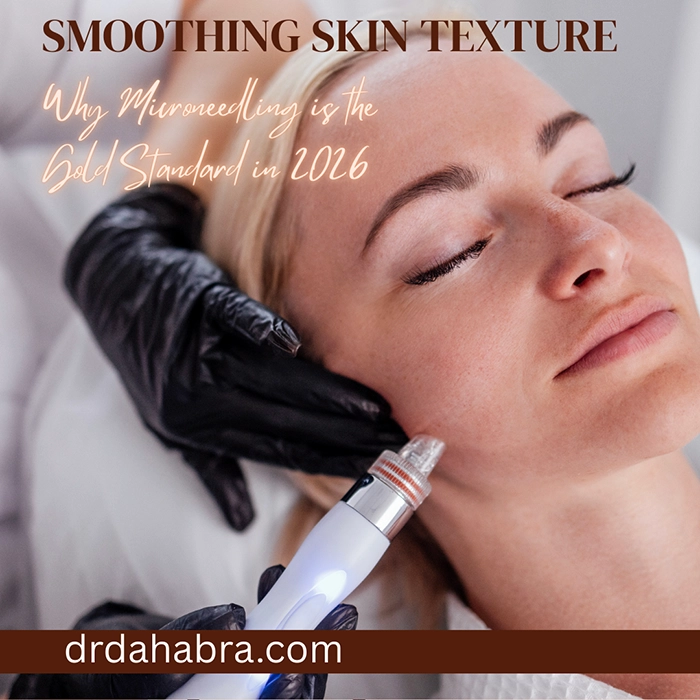
Smoothing Skin Texture: Why Microneedling is the Gold Standard in 2026
What is microneedling, and how does it actually work?
As of 2026, microneedling has firmly cemented its reputation as the gold standard for smoothing skin texture, acting as a versatile, minimally invasive solution for collagen induction therapy. This article discusses Smoothing Skin Texture: Why Microneedling is the Gold Standard in 2026.
Its continued dominance over other, more aggressive resurfacing methods is driven by its ability to deliver significant results that address orange peel skin, pitted acne scars, and fine lines, while maintaining a high safety profile across all skin tones and requiring minimal downtime. Think of it as a biological “reset button” for your face that uses your body’s own healing powers to erase years of damage.
The process involves a professional microneedling pen equipped with tiny, sterile needles that create thousands of controlled micro-injuries in the skin surface. You might wonder why anyone would want to poke holes in their face, but these tiny channels are the magic ingredient.
They trick your brain into thinking there is a major injury, which sends a rush of growth factors and healing cells to the area. This natural response starts a cascade of repair that replaces old, damaged tissue with fresh, bouncy fibers.
During a typical facial rejuvenation treatment, your provider will glide the device over your skin after applying a numbing cream. This isn’t just about the needles, though; those tiny holes act as temporary tunnels.
This allows specialized serums, like high-molecular-weight hyaluronic acid, to travel deep into the dermis, where they can actually do some good. It is a sophisticated way to remodel the skin from the inside out without the harsh heat or peeling associated with older technologies.
Table of Contents
1. What is the difference between microneedling and dermarolling?
2. Why is microneedling called “Collagen Induction Therapy”?
3. Is microneedling safe for all skin tones and Fitzpatrick types?
4. Can microneedling fix deep “ice pick” or “boxcar” acne scars?
5. How does the treatment improve rough or “orange peel” skin texture?
6. Will microneedling actually shrink my enlarged pores?
7. Is microneedling effective for surgical or hypertrophic scars?
8. Can microneedling help with stretch marks and body skin texture?
9. Is RF microneedling better than traditional needles for deep scarring?
10. What are “exosomes,” and why are they paired with microneedling now?
11. How does Microneedling with PRP (Vampire Facial) accelerate healing?
12. What is the typical 7-day recovery timeline after microneedling?
13. How do I manage redness and “pinpoint bleeding” post-treatment?
14. What are the signs of a post-microneedling infection or “track marks”?
15. Frequently Asked Questions (FAQs)
16. Conclusion
17. References
1. What is the difference between microneedling and dermarolling?
When you look at a professional microneedling vs dermaroller comparison, the differences are night and day.
A dermaroller is a manual drum covered in needles that you roll across your face, which often creates a “sideways” tearing motion as the needles enter and exit the skin at an angle. This can lead to unnecessary trauma and longer healing times.
In contrast, a professional microneedling pen uses an automated stamping motion that moves up and down in a straight line, ensuring precision and safety.
The depth of the needles is another massive factor. At home, microneedling risks are high because consumer rollers typically reach only very shallow depths, around 0.25mm.
While this might help your moisturizer sink in a bit better, it won’t do much for deep acne scar removal or pitted acne scars. Professional devices can reach depths of up to 2.5mm or 3.0mm, where the real collagen remodeling occurs.
If you are trying to fix deep-seated issues, the manual roller just won’t cut it.
Safety and sanitation are the final pieces of the puzzle. It is incredibly hard to keep a reusable dermaroller truly sterile in a home bathroom, which increases the chance of breakouts or infections.
Professionals use single-use, medical-grade needle cartridges for every session. Plus, they can adjust the speed and depth for different parts of your face, like going shallower on the forehead and deeper on the cheeks.
This customization is why the professional microneedling cost is worth it for anyone serious about improving skin texture.
2. Why is microneedling called “Collagen Induction Therapy”?
The term Collagen Induction Therapy sounds a bit like a science experiment, but it is actually a very literal description of what happens.
Collagen is the scaffolding of your skin; it’s what keeps things firm and smooth. As we age or after we develop acne, that scaffolding weakens or breaks down.
This treatment literally “induces” or coaxes your body to build a brand-new support system. It’s like renovating a house rather than just putting a fresh coat of paint on a crumbling wall.
When the needles penetrate the skin, they break up old, tethered collagen fibers that are pulling down on scars. This release is a huge part of acne scar therapy.
Once the old stuff is out of the way, the body starts producing Type III collagen, which eventually matures into the much stronger Type I collagen. This process doesn’t happen overnight, but it creates a permanent change in your skin’s architecture.
It is the ultimate long game for anyone wanting a youthful glow.
This therapy is so effective because it works with your biology instead of against it. Unlike some lasers that use heat to vaporize skin layers, dermatological skin needling keeps the top layer of your skin, the epidermis, mostly intact.
This means your “protective barrier” stays functional while the deeper layers are being rebuilt. It’s a smart, efficient way to get results without the risk of significant scarring or pigment changes that can happen with more “violent” treatments.
3. Is microneedling safe for all skin tones and Fitzpatrick types?
One of the best things about this treatment in 2026 is its inclusivity.
Many laser treatments carry a risk of hyperpigmentation or “burning” for people with darker skin tones because the lasers target pigment. Since microneedling is a mechanical process rather than a light-based one, it is a safe microneedling option for darker skin.
It doesn’t discriminate based on the amount of melanin you have, making it a “colorblind” solution for skin texture treatment.
For people with Fitzpatrick types IV through VI, the main concern is always post-inflammatory hyperpigmentation. Because the needles create “cold” channels rather than generating heat, the risk of triggering pigment-producing cells is much lower.
However, it is still vital to see a pro who knows how to properly prep the skin. Often, they suggest using a pigment-inhibiting serum for a few weeks before the session to ensure everything goes smoothly.
Even though it is safe, the aftercare is where the real work happens for deeper skin tones. You have to be extra diligent about sun protection during the microneedling recovery phase.
Even a little bit of UV exposure on “open” skin can cause dark spots. But when done correctly, this treatment is a game-changer for treating uneven skin tone and scarring in communities that were previously told to avoid resurfacing procedures.
4. Can microneedling fix deep “ice pick” or “boxcar” acne scars?
If you have lived with deep, pitted acne scars, you know how much they can affect your confidence.
Microneedling for scars is one of the most effective ways to fill those depressions. Ice pick scars are narrow and deep, while boxcar scars are wider with sharp edges.
The needles work by breaking up the tough, fibrous bands that are “hooked” into the deeper tissue and pulling the skin downward. Once those bands are snapped, the skin can finally rise back up.
For these specific types of deep scarring, your practitioner will likely use the best microneedling depth scars require, often reaching into the deeper dermis. You might not see a total disappearance after one session, as these are “structural” issues in the skin.
Most people need a series of treatments to see that smooth, flat surface return. It’s like filling in a pothole; sometimes you need a few layers of material to make it perfectly level with the road.
We often see amazing results when we combine this with other techniques. For example, some people benefit from “subcision” followed by needling to really get those deep scars to move.
The goal is to create a new, smooth foundation. Over several months, as the collagen matures, those deep pits become shallower and less noticeable, especially under harsh lighting where they used to cast shadows.
5. How does the treatment improve rough or “orange peel” skin texture?
Orange peel texture is the bumpy, porous look that often appears on the cheeks or nose.
It usually happens when the skin loses elasticity, and pores start to sag, or from years of sun damage. Microneedling for skin texture is the direct answer to this.
By tightening the surrounding skin through collagen production, it “shrinks” the appearance of that roughness. It’s like taking a piece of wrinkled linen and steaming it until it’s crisp and smooth.
Improvement in skin texture is usually one of the first things people notice. After the initial redness fades, the skin often takes on a “lit from within” glow.
This happens because the needles exfoliate the very top layer of dead skin cells while simultaneously thickening the layers beneath. It’s a double-whammy of smoothing that makes makeup apply like a dream.
Over a series of sessions, the “hills and valleys” of rough skin begin to level out. The new collagen fills in the micro-depressions that create that orange peel look.
Many patients report that their skin feels softer to the touch within just a few weeks. It is an incredible way to regain that “glass skin” look without resorting to heavy photo filters.
6. Will microneedling actually shrink my enlarged pores?
Let’s get one thing straight: you can’t technically “shrink” your pores like a closing window because they don’t have muscles.
However, microneedling for large pores is highly effective because it firms up the “walls” of the pores. Think of a pore like a circular opening in a piece of spandex.
If the spandex is loose and old, the hole looks huge. If you tighten the spandex, the hole looks tiny.
That is exactly what collagen induction therapy does for your skin.
During the treatment, the needles create trauma right around the pore openings. As the skin heals and tightens, it pulls the edges of the pores closer together.
This makes them look much smaller and more refined. For those with oily skin, this is a lifesaver because it helps clear out debris that can make pores look larger than they actually are.
The results of large-pore treatment are usually cumulative. You might see a slight difference after one session, but microneedling for pores is usually recommended in a series of 3 to 6.
This ensures a strong, long-lasting tightening effect. It is one of the few treatments that actually addresses the root cause of why pores look “stretched out” in the first place.
7. Is microneedling effective for surgical or hypertrophic scars?
Surgical scars and hypertrophic scars (the raised ones) can be tricky, but needling offers a unique solution.
Unlike pitted scars, where we want to “fill” a hole, with raised scars, we want to “flatten” and “soften” the tissue. The needles go into the dense, disorganized scar tissue and break it apart.
This signals the body to replace that “emergency” scar tissue with more organized, normal skin fibers.
It is a bit of a paradox that treating minor injuries can fix a major one, but it works brilliantly. The process helps fade the scar’s redness and improves its texture, making it blend better with the surrounding skin.
It won’t make a surgical scar disappear 100%, but it can make it significantly flatter and less “angry” looking. This is often a preferred method because it doesn’t carry the same risk of excessive scarring as a laser might.
Patients often find that their scars become much more pliable and less tight after a few rounds. This is especially helpful for scars near joints or on the face, where movement is important.
By softening the “cord-like” feel of the scar, you achieve both cosmetic and functional improvements. It’s all about remodeling that tough tissue into something that looks and feels more like real skin.
8. Can microneedling help with stretch marks and body skin texture?
Stretch marks are essentially scars that happen from the inside out when the skin stretches too fast.
Since they represent a tear in the dermal layer, microneedling is a fantastic way to treat them. Whether they are on the stomach, thighs, or arms, the needles can reach deep enough to trigger repair in those “stretches.”
It helps to bridge the gap between the torn edges of the skin.
Many people find that their stretch marks become narrower and less silver or “shiny” after treatment. The skin’s texture also tightens, which is great for that slightly crepey look that can occur after weight loss or pregnancy.
While it takes patience, the improvement in body skin texture can be quite dramatic. It’s like “knitting” the skin back together one tiny needle at a time.
Because the skin on the body is thicker than that on the face, the professional will usually increase the depth setting on the microneedling pen. This ensures the treatment is actually reaching the level where the stretch mark “tear” exists.
It is a much more affordable and less painful option than many body-contouring lasers, with the added benefit of naturally thickening the skin over time.
9. Is RF microneedling better than traditional needles for deep scarring?
Radiofrequency (RF) microneedling is like traditional needling but with a high-tech boost.
In this version, the needles release a burst of heat energy once they reach the bottom of their “stamp.” This heat causes immediate skin tightening and reaches even deeper than mechanical needles alone.
If you are dealing with very severe acne scar removal or significant sagging, the RF microneedling benefits are often worth the extra cost.
The heat energy triggers a process called “electro-coagulation,” which sounds scary but just means the collagen contracts and thickens even more aggressively. This makes it a powerhouse for deep boxcar scars and even some skin tightening.
However, it isn’t always “better” for everyone. Some people with sensitive skin or certain pigment issues might prefer the traditional “cold” method to avoid the risks of heat.
When comparing microneedling vs. laser for texture, RF needling often wins because it can reach deeper without damaging the skin’s surface. It’s essentially a 2-in-1 treatment: you get the physical remodeling from the needles and the thermal remodeling from the RF energy.
It is becoming the “heavy hitter” in dermatological offices for people who want the most dramatic results in the fewest sessions.
10. What are “exosomes,” and why are they paired with microneedling now?
In 2026, exosomes are the hottest topic in the skincare world.
These are tiny “messenger” bubbles derived from stem cells that tell your skin cells exactly how to behave. When applied during a microneedling session, they enter those tiny channels and begin communicating with your cells immediately.
They are like a specialized “instruction manual” that tells your skin to heal faster and produce more collagen than it ever could on its own.
Pairing exosomes with a professional microneedling session can cut your downtime in half. Instead of being red for three days, many people find they are back to normal in 24 hours.
They also significantly boost the final results, making the skin look much more vibrant and plump. It’s like adding high-octane fuel to an already powerful engine; it just makes everything work better and faster.
This combination is particularly effective for older skin or skin that heals very slowly. As we get older, our cells get a bit “lazy” and don’t respond to injury as quickly.
Exosomes give them the “kick in the pants” they need to act young again. While it adds to the price, the results often speak for themselves, making it a favorite among those seeking the “ultimate” facial rejuvenation treatment.
11. How does Microneedling with PRP (Vampire Facial) accelerate healing?
You’ve probably seen the photos of people with spots of blood on their faces—that’s the “Vampire Facial,” or microneedling combined with PRP (Platelet-Rich Plasma).
PRP is created by taking a small sample of your own blood, spinning it in a centrifuge to concentrate the platelets, and then applying that “liquid gold” back onto your skin. Those platelets are packed with growth factors that nature designed to repair tissue.
The beauty of this is that it uses your own biology, so there is zero risk of an allergic reaction. The growth factors jump-start the healing process the moment they hit the micro-channels.
It’s one of the best ways to speed up the microneedling results timeline and texture, as the skin starts its repair cycle at 100mph rather than a slow crawl. It’s a natural, potent way to supercharge your session.
Beyond just healing, PRP adds an extra layer of “glow” that you can’t get from needles alone. It helps with fine lines, dark circles under the eyes, and overall skin health.
It is particularly effective for those who want to see a visible “refresh” in their skin tone. Even though it involves a quick blood draw, most patients find the boost in results makes it more than worth the extra step.
12. What is the typical 7-day recovery timeline after microneedling?
The first 24 hours after your session are the “red” zone.
You will likely look and feel like you have a moderate sunburn. Your skin might feel tight and a bit “stinging,” which is totally normal.
This is the time to stick strictly to the microneedling aftercare guide provided by your pro—usually just gentle cleansing and lots of hyaluronic acid. No makeup, no sweating, and definitely no harsh acids.
By days 2 to 4, the redness usually fades to a light pink. This is when the “sandpaper” phase starts.
Your skin might feel rough, and you might notice some very light peeling or flaking. This is just the old, dead skin cells being pushed out by the new ones growing underneath.
It’s tempting to scrub them off, but you have to let them fall off naturally to avoid any scarring or “track marks.
By day 7, most people are “camera ready.” The peeling is gone, the redness is a memory, and you are left with a fresh, bright complexion.
While internal collagen production will continue for the next three to six months, you can resume your normal skincare routine, including your retinols and Vitamin C.
Just remember to keep the sunscreen on, as your “new” skin is extra sensitive to the sun.
13. How do I manage redness and “pinpoint bleeding” post-treatment?
Pinpoint bleeding during the treatment is actually a good sign!
It means the needles have reached the “sweet spot” in the dermis where the collagen lives. Your practitioner will clean this up before you leave, so you won’t walk out looking like a horror movie character.
To manage the lingering redness, the best thing you can do is stay cool and hydrated. Avoid hot showers, saunas, or intense workouts for the first 48 hours.
A post-microneedling skincare routine should be incredibly simple. Think of your skin as a “raw” wound for the first few hours.
Using a chilled sheet mask (as long as it’s sterile and approved by your tech) can feel amazing. Applying a pure, high-quality hyaluronic acid serum every few hours will help keep the skin from feeling too tight and soothe inflammation.
If the redness persists for more than 3 days, you can usually use a mineral-based makeup to cover it. Mineral makeup is breathable and doesn’t clog the tiny channels that are still closing.
However, most people find that by the second day, the redness is easy to manage and just looks like a healthy “flush” from a long walk. Just be patient and let your body do its thing!
14. What are the signs of a post-microneedling infection or “track marks”?
While complications are rare when seeing a professional, it’s good to know what to look for.
Normal healing involves redness and a bit of swelling. Abnormal signs include “honey-colored” crusting, worsening rather than improving pain, or pustules.
If you see these, call your provider immediately. Most infections are easily treated if caught early, but they usually happen when someone uses dirty makeup brushes too soon.
“Track marks” or “grid marks” are tiny lines or patterns that look like the needle head. These sometimes occur when the practitioner uses a dragging motion instead of a stamping one, or when the needles are too dull.
In most cases, these are temporary and will fade as the skin heals. However, to prevent this, always ensure your provider uses a high-quality, FDA-cleared device, such as a SkinPen or a reputable automated pen.
Another thing to watch for is “stamping” scars, which occur when pressure is applied too forcefully to a bony area, such as the forehead. A good pro knows to adjust the depth based on the “meatiness” of the area being treated.
If you follow your aftercare and choose a skilled practitioner, your risk of any permanent issues is incredibly low. The goal is a smooth, even finish, and that starts with a safe, professional technique.
15. Frequently Asked Questions (FAQs) about Smoothing Skin Texture: Why Microneedling is the Gold Standard in 2026
Q1. What is the gold standard for microneedling?
Concise Answer: As of 2026, the gold standard involves using an FDA-cleared automated device, like the SkinPen, often paired with exosomes or PRP for maximum collagen induction.
Detailed Answer: To get the best possible results, you want a treatment that is precise, sterile, and deep enough to reach the dermis. The current “gold standard” focuses on creating uniform micro-channels without tearing the skin, which is why automated pens are favored over old-school manual rollers.
When you add high-tech boosters like exosomes, you are not just wounding the skin; you are giving it the exact chemical signals it needs to rebuild itself into a smoother, firmer version.
Q2. What is the newest skin-tightening procedure in 2026?
Concise Answer: The most cutting-edge procedure is AI-guided RF microneedling, which adjusts energy levels in real-time based on your skin’s resistance.
Detailed Answer: Technology has moved fast, and now we have devices that can “sense” how thick or hydrated your skin is and adjust the heat from the radiofrequency needles accordingly. This ensures you get the perfect amount of energy for tightening without risking over-treatment of the area.
It’s a huge step forward because it makes the treatment much more customized to your specific face, leading to tighter skin on the jawline and neck with less “guesswork” from the technician.
Q3. Does microneedling smooth skin texture?
Concise Answer: Yes, it is one of the most effective ways to smooth rough skin and fill in acne scars or aging depressions.
Detailed Answer: By creating thousands of tiny wounds, the skin is forced to produce new, healthy tissue that fills in the “gaps” that create rough texture. Whether you are dealing with large pores, “orange peel” skin, or fine lines, collagen remodeling can significantly refine the surface, making it look and feel smoother.
Most people notice their skin feels much softer and looks more “blurred” or airbrushed after their initial healing phase is over.
Q4. Why is microneedling so popular?
Concise Answer: It is popular because it offers dramatic results for scars and aging with very low risk and minimal downtime compared to surgery.
Detailed Answer: People love this treatment because it works with your body’s natural healing systems rather than harsh chemicals or intense lasers, which can be scary. You can get a session done on a Friday and be back at work on Monday looking refreshed, which fits perfectly into a busy modern lifestyle.
Plus, it is one of the few treatments that is safe and effective for almost every skin type and color, making it a “universal” beauty solution.
Q5. Does microneedling hurt, and what does the numbing process involve?
Concise Answer: With a high-quality topical numbing cream applied for 30 minutes, most people describe the feeling as just a light, vibrating pressure.
Detailed Answer: We won’t lie and say you feel nothing, but it isn’t “painful” in the way most people imagine needles would be. Before the session starts, a medical-grade lidocaine cream is applied to your skin, which makes the area quite numb.
You might feel a bit of “tickling” or “grittiness” around bony areas, such as your forehead or nose, but most patients find it very tolerable. It’s definitely less painful than getting a tattoo or even some deep-tissue massages.
Q6. Can I target specific small areas instead of the whole face?
Concise Answer: Absolutely, you can “spot treat” areas like a specific surgical scar, a few ice-pick scars on the cheek, or lines around the mouth.
Detailed Answer: While most people choose to cover the whole face for an overall “glow,” the device is perfect for targeting trouble spots. If you have a particular scar that bothers you, your provider can spend more time on that area, adjusting the depth to reach the specific tissue.
It’s a very flexible treatment that can be tailored to your specific concerns rather than being a “one size fits all” approach.
Q7. Are microneedling results permanent, or do I need maintenance?
Concise Answer: The collagen you build is permanent, but since your skin continues to age naturally, most people do “touch-up” sessions once or twice a year.
Detailed Answer: The structural changes to your scars and texture are lasting because the new collagen is part of your skin’s permanent architecture. However, your body slowly breaks down collagen as part of the normal aging process.
To keep that “glass skin” look and stay ahead of new fine lines, a maintenance session every 6 to 12 months is a great idea. It’s like keeping up with car maintenance, so it runs smoothly for years.
Q8. What are the most common mistakes that ruin microneedling results?
Concise Answer: The biggest mistakes are using a dirty dermaroller at home, picking at the peeling skin, and skipping sunscreen after the treatment.
Detailed Answer: You have to be “kind” to your skin while it’s healing to see the best results. If you pick at the little flakes of skin, you risk creating new scars or dark spots.
Also, using products with harsh acids or retinoids too soon can irritate the “open” skin and cause a bad reaction. The best results come to those who follow the “less is more” rule for the first week—just hydrate, protect, and let the body do the heavy lifting.
Q9. Why does my skin look worse/duller the week after microneedling?
Concise Answer: This is a normal part of the healing phase where old skin cells are surfacing, and the skin is slightly dehydrated.
Detailed Answer: Don’t panic! Around day 3 or 4, your skin might look a bit “dusty” or dull because the top layer is preparing to shed. The internal healing is taking up a lot of moisture, which can make the surface look temporarily dry.
Once that old layer flakes off, you will see the bright, new skin underneath. It’s just the “ugly duckling” phase before the “swan” emerges, and it usually only lasts a couple of days.
Q10. How do I prevent “grid marks” or “stamping” scars?
Concise Answer: Ensure you are seeing a trained professional who uses an automated pen and doesn’t use excessive pressure on thin-skinned areas.
Detailed Answer: Grid marks usually happen when the needles are “dragged” across the skin or when an old-fashioned roller is used incorrectly. A professional using a stamping device will move in a methodical way that prevents these patterns from forming.
Also, a good technician knows to lighten their touch and decrease the needle depth when they are working over bone. Choosing an experienced practitioner is the #1 way to avoid these “mechanical” looking side effects.
Q11. Does microneedling cause facial fat loss (volume loss)?
Concise Answer: No, traditional microneedling does not reach the fat layer; it only works within the skin layers themselves.
Detailed Answer: There is a common myth that needling can “melt” fat, but the needles simply aren’t long enough to reach the subcutaneous fat layer where volume lives. Even RF microneedling, which uses heat, is carefully controlled to target the dermis.
In fact, by thickening the skin and increasing collagen, most people find their face looks “fuller” and more youthful rather than thinner. It improves the skin’s “drape” over your existing facial structure.
Q12. Why are my pores looking larger immediately after the treatment?
Concise Answer: Temporary swelling and the “opening” of the channels can make pores look more prominent for the first 24-48 hours.
Detailed Answer: It can be a bit startling to look in the mirror the next day and see your pores looking wide open, but it is just a sign of inflammation. The skin is slightly swollen, which can temporarily “stretch” the pore openings.
As the swelling goes down and the skin starts to tighten from the new collagen, those pores will actually look smaller than they did before you started. Just give it a few days for the “dust to settle.”
Q13. Can microneedling permanently reduce large pores, or are the results temporary?
Concise Answer: While it significantly improves pore appearance by tightening the skin, the results are long-lasting but subject to natural aging.
Detailed Answer: By strengthening the “walls” of your pores, you are making a structural change that doesn’t just wash away. However, factors such as oil production, sun damage, and aging will continue to affect your skin over time.
If you keep up with a good skincare routine and occasional maintenance sessions, your pores will stay looking refined and small for a very long time. It’s a “durable” improvement rather than a “permanent” one.
Q14. Is professional microneedling really better than at-home dermarollers for texture and scars?
Concise Answer: Yes, professional treatments are safer, more precise, and reach the depths necessary to actually change the skin’s structure.
Detailed Answer: At-home rollers are fine for a temporary “glow,” but they simply cannot reach the depths needed to fix deep acne scars or significant texture issues. Plus, the risk of infection and “tearing” the skin with a manual roller is much higher.
A professional device offers customizable settings that deliver the exact care your face needs to different parts. If you want clinical results that you can actually see in the mirror, the professional route is the only way to go.
Q15. How many microneedling sessions do I realistically need to fix my pores and texture?
Concise Answer: Most people need a series of 3 to 6 sessions, spaced about 4 to 6 weeks apart, for significant structural changes.
Detailed Answer: Collagen building is a marathon, not a sprint. While you might see a “glow” after one session, it takes multiple treatments to truly remodel deep scars or very rough texture.
Your skin needs time to heal and build new fibers between appointments. By the third or fourth session, most people start to see the “wow” results, with the skin looking remarkably smoother and more even.
Patience is key when you are growing brand new skin!
16. Conclusion: The Path to Renewed Skin
Taking the step to address skin texture through microneedling is more than just a cosmetic choice; it is a way to reclaim the confidence that comes with feeling comfortable in your own skin.
There is a specific kind of freedom that comes from waking up without the need to hide behind heavy foundations or clever lighting. By choosing to work with your body’s own natural healing intelligence, you are investing in a version of yourself that feels fresh, vibrant, and resilient.
Imagine looking in the mirror and seeing a surface that is smooth, firm, and glowing with health. The journey through collagen induction therapy is a powerful reminder that our skin has an incredible capacity for renewal and change.
Whether you are seeking to erase the “echoes” of past acne or simply want to smooth out the “orange peel” texture that has crept up over the years, this treatment offers a bridge to the complexion you’ve always wanted. It is a gentle yet effective way to tell your skin that it’s time to start fresh.
The beauty of this process lies in its authenticity. You aren’t masking your features or changing who you are; you are simply allowing your skin to be the best possible version of itself.
As the new collagen fibers weave together to create a smooth, tight foundation, you’ll find that the results are as much about how you feel as how you look.
Take the leap into a more confident future—your skin is ready to transform, and the results are waiting just beneath the surface.
We have covered everything about Smoothing Skin Texture: Why Microneedling is the Gold Standard in 2026.
Smoothing Skin Texture: Why Microneedling is the Gold Standard in 2026
Smoothing Skin Texture: Why Microneedling is the Gold Standard in 2026 with Dr. Dahabra. Why wait to unlock your beauty?
Call us now at (954) 595-2607 or book online. Your journey begins with just a click or a call.
Embrace the beauty, embrace innovation – Embrace You.
17. References
Plantation Med Spa, Florida
West Palm Beach Med Spa
- Source: National Center for Biotechnology Information (NCBI) – PMC
- Brief: This clinical study provides histological evidence that microneedling stimulates repair processes and increases dermal protein levels. It highlights a significant improvement in skin texture and patient satisfaction after a series of six sessions, specifically noting success in rolling and boxcar scars.
- Source: MDPI – Cosmetics Journal
- Brief: A comprehensive 2024 review detailing how micro-channels facilitate the delivery of bioactive agents like hyaluronic acid and retinoids. It confirms that microneedle length is a critical factor in pain management and clinical efficacy for skin rejuvenation.
- Source: Indian Dermatology Online Journal (via PMC)
- Brief: Published in late 2024/2025, this research explores the biological cascade of “micro-injury” to “neocollagenesis.” It compares various needle depths and confirms that 2.5mm lengths are superior for deep atrophic scar remodeling.
- Source: Journal of Cutaneous and Aesthetic Surgery
- Brief: This paper explains the “color-blind” nature of RF microneedling. It details how radiofrequency energy creates thermal coagulation in the dermis while sparing the epidermis, making it a safe and potent option for all Fitzpatrick skin types.
- Source: Wiley Online Library (Skin Research and Technology)
- Brief: This 2023 study challenges old myths by demonstrating that microneedling can be safe even for active acne patients. It shows that the procedure does not disrupt the skin microbiome or worsen inflammatory lesions when performed correctly.
- Source: MDPI – Pharmaceutics
- Brief: This research focuses on the transition from simple mechanical needling to “dissolving microneedles.” It evaluates the mechanical properties and fabrication of patches used for deep drug delivery and tissue regeneration.
- Source: ResearchGate (International Journal of Pharmaceutics)
- Brief: An in-depth look at how microneedle arrays induce cell proliferation. The study highlights that wound-healing capabilities are significantly increased when the procedure is used to deliver growth factors from blood platelets (PRP).
- Source: ResearchGate (Meta-analysis)
- Brief: A 2025 systematic review of 15 studies involving 1,230 participants. It found that skin texture improved in 71% to 100% of patients treated with RF-based modalities, with an excellent safety profile and high patient-centered outcomes.
- Source: Cureus (Journal of Medical Science)
- Brief: This 2024/2025 review solidifies microneedling’s role in modern aesthetic medicine. It discusses the evolution of the technique and its ability to enhance the quality and accuracy of scar remodeling through automated advancements.
- Source: StatPearls Publishing (National Library of Medicine)
- Brief: An updated clinical reference used by healthcare providers. It details the precise protocol for “percutaneous collagen induction” and the specific intervals between sessions required to allow Type III collagen to mature into Type I.